From Tyre to Tripoli – a Phoenician Boat Journey
By Paul Shalhoub – VP and Chief Editor
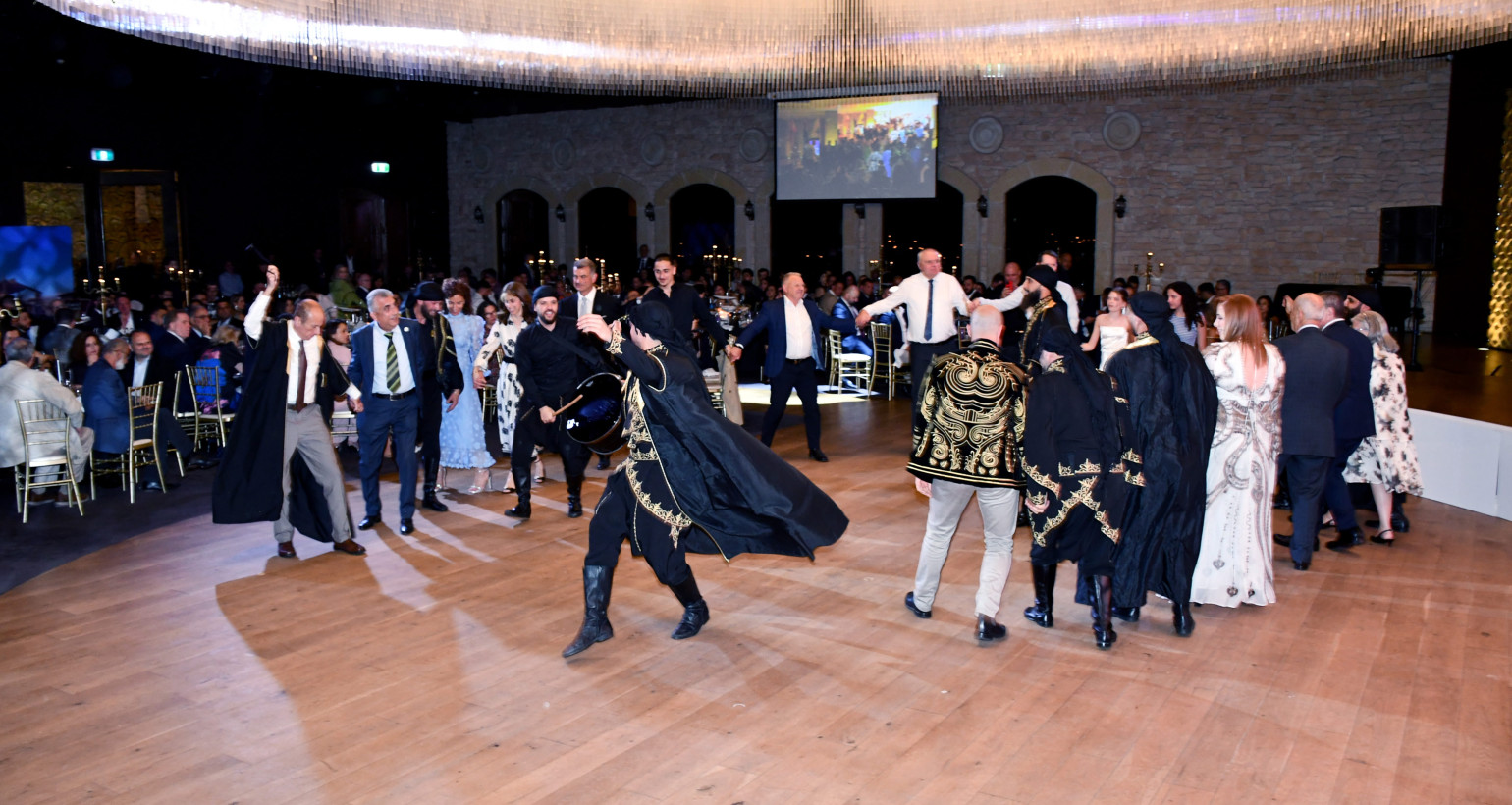
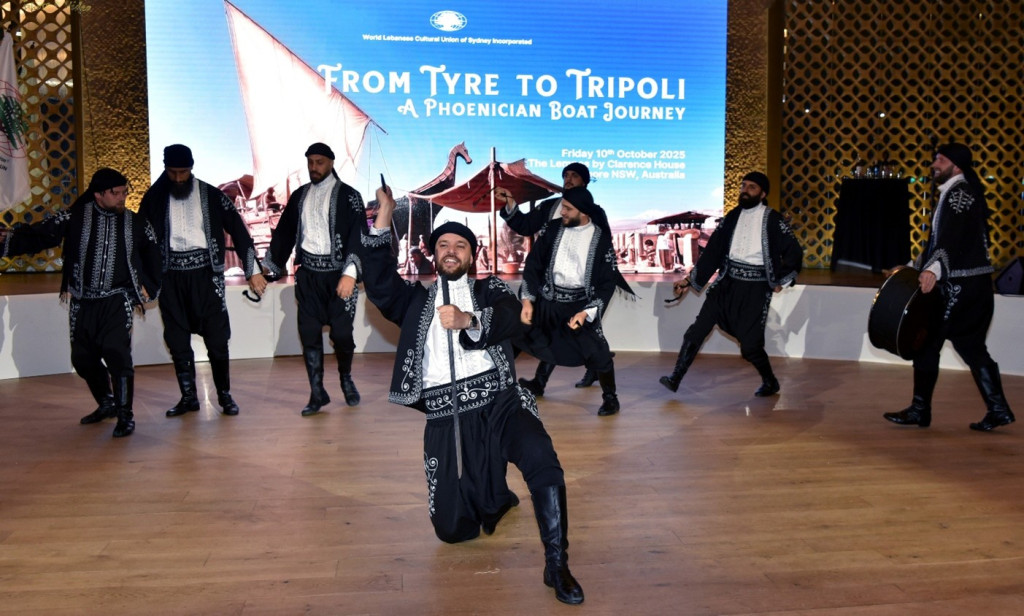
Our new signature event “From Tyre to Tripoli – a Phoenician Boat Journey” debuted on 10th October 2025. Our sold-out event with 450 guests was universally lauded as our greatest event ever – superb food, Lebanese dancing, insights into our shared Phoenician history by an archaeologist, opera by sopranist Amelia Farrugia, attendance by the WLCU World President and World Secretary General (both visiting from France), the introduction of the Phoenician God: Adonis (courtesy of AI), Lebanese “ashta” ice cream by Tripoli native Abu Hassan (courtesy of BuBooza). The fun packed evening also raised over $50,000 to provide critical aid for the poor in Lebanon.
Following on from En Route to Beirut
Our new signature event follows our original signature event, En Route to Beirut, which debuted in late 2020 and was repeated three times over 4 years. En Route to Beirut will be remembered for our Beirut taxi prop against a media wall that featured various Lebanese streetscapes. The En Route series featured hopping in our taxi as we traversed modern Lebanon stopping at towns as we journeyed to our final destination of Beirut. Along the way we enjoyed the traditional food, drinks and facts of the towns we stopped at, before ending up in our beloved Beirut. From Tyre to Tripoli, however, does it all in a Phoenician boat, stopping at ports and learning about Lebanon’s incredible history.
Celebrating our Phoenician ancestry
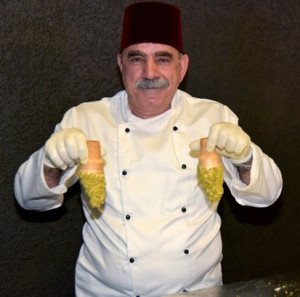
The evening celebrated the grandeur of the Phoenician Lebanese civilisation and culture, through food, wine and song. Journeying with our beloved ancestors this first event visited four famed seaports: Tyre, Sidon, Jounieh and Tripoli. It was an immersive experience that imbued us all with everything that is special and interesting about the food and history of our beloved Lebanon. A specially crafted menu that featured a sumptuous mezza with specialities from the ports we visited, before shared mains featuring Jounieh style shish taouk and kafta and Sidon fish in saffron. Along with fruit we had two dessert specialties from Tripoli – Halawet El Jibne and BuBooza ashta ice cream, crafted and served by native Tripoli ice cream expert, Abu Hassan. Until recently, Abu Hassan had been making traditional booza in Tripoli, since 1973, until his Sydney business partner David Isaac (one of the WLCU Sydney’s longest and most generous sponsors) “fell in love with his character and his ice-cream”.
One of the highlights of the evening was a documentary commissioned by WLCU Sydney between WLCU Sydney Dr Shane Geha and Dr John Whitehouse. Dr Whitehouse is both an esteemed lawyer and an archaeologist that has worked on many historical sites across the Mediterranean. The fifteen minute video production “The Phoenicians – a Legacy” covered the Phoenicians maritime skills, craftsmanship, the production of the first alphabet and then the background and historical significance of the ports we were visiting: Tyre, Sidon, Jounieh and Tripoli.
Why the Phoenician’s were a great maritime power
As Dr Whitehouse explained in our documentary, the Phoenicians were a dominant maritime power due to several unique factors. Firstly, they had the Cedars of Lebanon (Cedrus Libani) that was the premier ancient shipbuilding material prized by not just the Phoenicians but the Egyptians and Romans, for the durability, resistance to decay and resistance to insects, as well as their large size. Secondly, during the Bronze age none of the competing powers were maritime powers, giving the Phoenicians another edge. Their third edge was technical – they were able to build very large and sturdy, but shallow draft boats using the mortise and tenon wood joinery technique to link the planks together, giving them a technological and design advantage. Known as a Phoenician joint, more can be found here: Phoenician joint – Wikipedia. Finally, the Phoenicians “had a navigational advantage, because they were able to not simply navigate by hugging the coast, but through understanding of the starts to calculate latitude and longitude. So that not only did the Phoenicians manage to sail all throughout the Mediterranean, but through the straits of Gibraltar through to the maritime Atlantic side of the Iberian Peninsula. We also know that one of the Carthaginian Phoenician sailors Hanno reached the Gulf of Guinea in equatorial Africa.”
Phoenician craftsmanship and the first alphabet
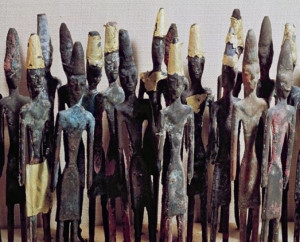
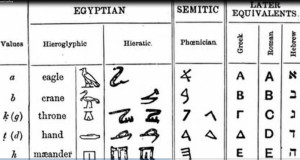
We highly recommend watching the full fifteen minute video, to get a much greater understanding of many of the aspects of the Phoenicians trading success. Dr Whitehouse also talks about Phoenician trading success being built on their high level of craftsmanship plus two natural resources – the Cedars of Lebanon and the murex shells that provided purple dye. But they were also skilled at metallurgy and the carving of ivory and wood, making Phoenicia a creative zone that generated new and interesting ideas and design, including glassmaking. Finally, Dr Whitehouse covers the development of the Phoenician alphabet, in the middle of the Iron Age, allowing the construction of new words in a simplified manner that could be adapted to different languages. It was dramatically different from pictographic alphabets and was quickly copied by the Greeks and Romans and is the base of today’s western alphabet.
Other highlights
There were so many other highlights of the evening, that we will name just a few. We were fortunate to have with us from France, our WLCU World President, Mr Roger Hani, and the WLCU World Secretary General, Mr Georges Abi Raad as well as the Australian GRC President for Australia & New Zealand, Mr Antoine Karam. President Hani’s speech concentrated on the achievements of the WLCU worldwide, and thanked WLCU Sydney for its leadership in Australia and the wonderful event. President Hani then presented a special Appreciation Award, to Dr Shane Geha, on behalf of himself and the World Secretary General “With deepest appreciation for your generous sponsorship and support, which has greatly contributed to our success.”
We were also fortunate to have many other distinguished guests: Dr Hugh McDermott MP, a member of the NSW Legislative Assembly as the member for Prospect and Parliamentary Secretary to the NSW Attorney General; Tina Ayyad MP, the NSW member for Holsworthy and Shadow Parliamentary Secretaries for Education; Families & Communities and Youth and Mr Ned Mannoun, Mayor of Liverpool. These dignitaries joined members of the WLCU from the World body, Sydney , the Queensland, Melbourne and ACT chapters.
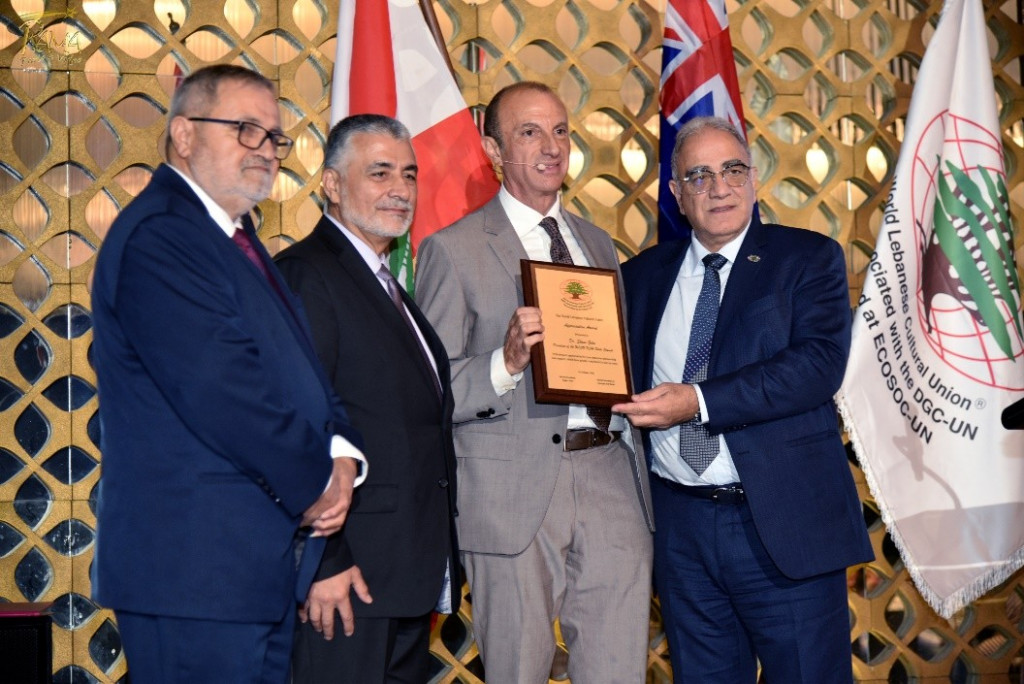
Hani with the award for Dr Geha.
Another fun segment, featured sampling different alcoholic beverages, which was hosted by Roscoe Power (Co-founder and CEO of GRADA) and rugby league legends, Craig Wing (formerly of the Sydney Roosters) and Tim Mannah (formerly of the Parramatta Eels and Lebanon). They were joined by our long-term sponsor from the Harkola Group – David Isaacs (pictured below). Further below, we showcase Tripoli native, Abu Hassan serving Lebanese Ice Cream (courtesy of BuBooza).
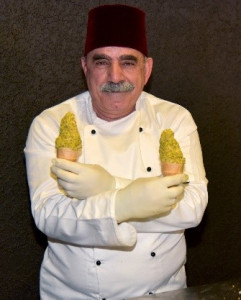
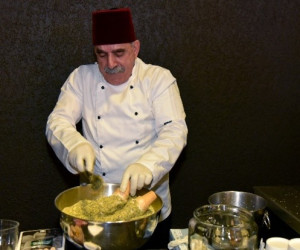
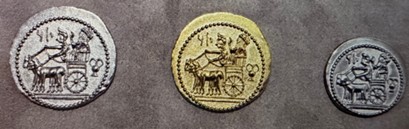
Finally, we were pleased to auction replica Phoenician coins minted in gold and silver!
Huge thanks again to our tremendous sponsors
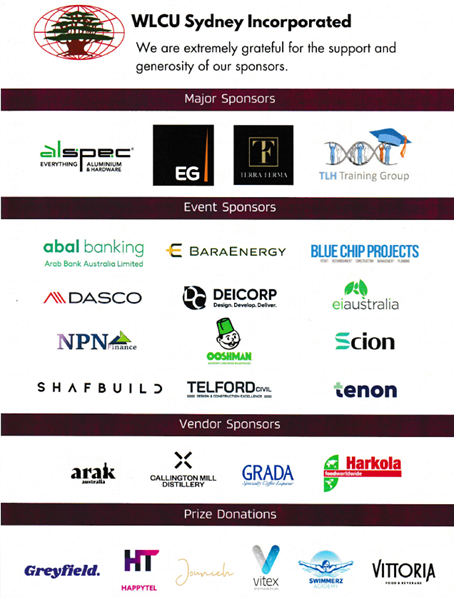
An event of this scale, that includes producing a documentary and building a gigantic screen to showcase it, along with so many other items can’t even be attempted, without the generous support of our sponsors. These are highlighted below, but don’t even include all of those involved, like Craig Wing and Tim Mannah who generously donated their time and money to host events that we could auction on the night. Thank you all so much!!