
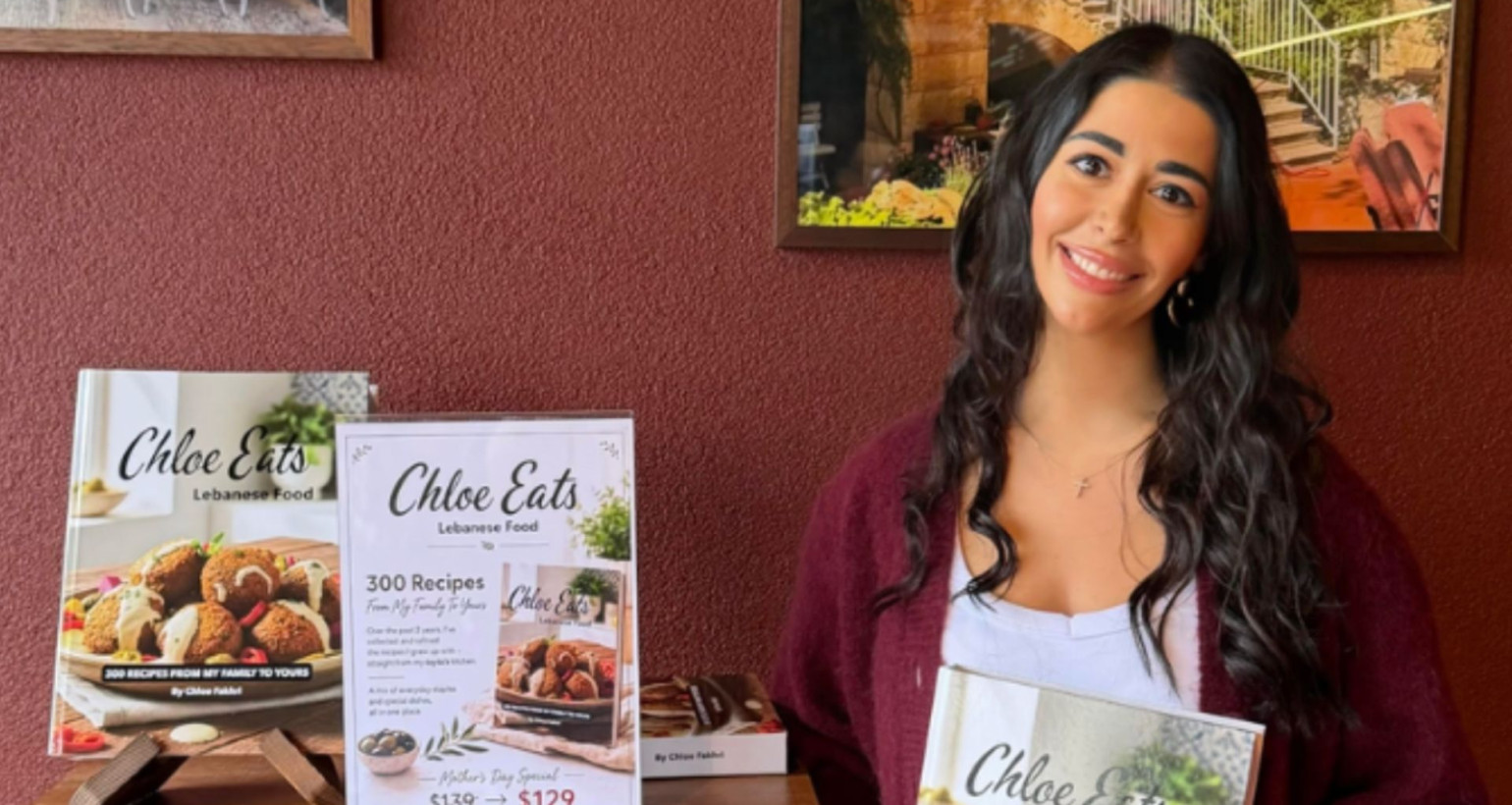
From Tayta’s Kitchen to the Next Generation: Mehshi Malfouf with Chloe Fakhri
By Malek Chalhoub
Lebanese food has never been only about what is placed on the table. It is a memory made edible: the scent of garlic warming in olive oil, the sound of leaves being rolled by hand, and the familiar instruction to add “just enough” of an ingredient whose quantity no one ever thought to measure.
Our recipes have survived because they were shared. They travelled from village kitchens to family homes across the world, passed from grandparents to parents and from one generation to the next through observation, patience and love. Yet with every passing year, preserving them becomes more important. When a recipe is written down, it protects more than a method of cooking. It preserves the person who taught it, the home in which it was prepared and the memories formed around it.
In this edition, we are pleased to feature Chloe Fakhri, creator of Chloe Eats: Lebanese Food, who shares the story behind her cookbook and one of Lebanon’s most cherished dishes: Mehshi Malfouf, or stuffed cabbage rolls.
In Chloe’s Words:
Some of my most favourite and earliest memories are in the kitchen with my taytas. Like many Lebanese families, our recipes were rarely written down. Measurements were a handful of this, a pinch of that, and cooking was something you learnt by watching, tasting and spending time together around the table.
Those memories inspired me to write Chloe Eats: Lebanese Food, a cookbook that preserves my family’s Lebanese recipes so they can continue to be shared for generations to come.
Over the past few years, many people have discovered my recipes through my Instagram page, @chloe_eats_melbourne, where I share authentic Lebanese cooking and the stories behind the dishes. The cookbook became a natural extension of that community.
At more than 400 pages, the book contains 300 recipes, from traditional breakfasts and homemade jams to mezze, soups, stews, seafood, main meals, desserts and drinks. Whether you are cooking your first batch of hummus or preparing a full Lebanese feast, the recipes have been written to make authentic home cooking accessible to everyone.
Throughout July, the cookbook is also helping to give back. For every copy sold, $10 will be donated to Vera Vitis Inc., supporting families in Lebanon by providing food, medication, medical assistance and shelter.
It has been incredibly rewarding to see recipes that were once shared only around my family’s table now being recreated in kitchens across Australia and overseas. My hope is that this cookbook inspires people to gather, cook and create lasting memories with the people they love.
I hope you enjoy the recipe shared below, and should you wish to discover the other 299, you can find my cookbook and a range of e-books at www.chloeeats.shop.
– Chloe Fakhri
Mehshi Malfouf – Stuffed Cabbage Rolls
ف وملف يمشح
Serves 6
Ingredients
For the Mehshi Malfouf
- 1 whole head green cabbage
- 1¼ cups medium-grain rice
- 500 g minced lamb, or 250 g lamb and 250 g beef
- 1 brown onion, finely diced
- 2 garlic cloves, minced
- 1 tomato, diced
- ½ cup fresh parsley, finely chopped
- 1 teaspoon Lebanese seven spice
- Salt, to taste
To cook
- 4 cups water, adjusted as needed
- 1 tablespoon tomato paste
- 1 tablespoon extra virgin olive oil
- 3 tablespoons lemon juice
- Salt, to taste
To garnish
- 3 tablespoons extra virgin olive oil
- 4 garlic cloves, finely chopped
Method
Place the whole head of green cabbage into a large pot of boiling water. Boil for approximately 15 minutes, or until the outer leaves have softened and can be separated easily. Carefully remove the cabbage leaves and set them aside.
In a large bowl, combine the rice, minced meat, onion, garlic, diced tomato, parsley, Lebanese seven spice and salt.
To prepare the cabbage leaves, slice away the thick central stem from each leaf. Place a spoonful of filling in the centre, then roll the leaf tightly into a cylinder.
Line the bottom of a large pot with leftover or torn cabbage leaves to prevent the rolls from sticking. Arrange the malfouf snugly in layers. Pour in enough water to just cover the rolls, then place a heatproof plate over them to hold them securely while they cook.
Stir in the tomato paste, drizzle over the extra virgin olive oil and lemon juice, and season with salt. Cover the pot and cook over medium heat for approximately one hour, or until the cabbage is tender and the rice is completely cooked.
In a small pan, heat three tablespoons of extra virgin olive oil over medium heat. Add the finely chopped garlic and cook for several minutes until fragrant and lightly golden, taking care not to let it burn.
Once the malfouf is cooked, pour the hot garlic mixture evenly over the rolls. Allow the dish to rest for five minutes before serving.
Sahtein ينصحت
A plate of malfouf may appear simple, but each roll carries something larger within it. It carries the hands that first taught us how to fold the leaves, the voices that filled the kitchen while the pot simmered and the understanding that food tastes different when it is prepared for people we love.
Chloe’s work reminds us that tradition does not preserve itself. It survives because someone chooses to learn it, record it and pass it forward. Through her cookbook, recipes once held within one family have become part of a wider Lebanese table, inviting others to cook, remember and create traditions of their own.
And perhaps that is the true meaning of Lebanese hospitality: not merely serving food, but ensuring there is always a place at the table for the next generation.