
History of the Phoenicians and Their Ports
By Dr Shane Geha
The Phoenicians
The Phoenicians were an ancient Semitic-speaking civilization that emerged around 3200 BCE along the eastern Mediterranean coast, primarily in what is now Lebanon, as well as parts of Syria and northern Israel. Renowned for their maritime prowess, they developed advanced shipbuilding techniques and established extensive trade networks across the Mediterranean. Their most notable contributions include the spread of the Phoenician alphabet, which influenced many modern writing systems, and the establishment of colonies, the most famous being Carthage in North Africa.
Tyre
Tyre, known in Phoenician as Ṣūr (present day Arabic name: صور / Sūr), was one of the most prominent city-states of Phoenicia. Situated on an island off the southern coast of modern-day Lebanon, it became a significant maritime and commercial hub. Tyre was famed for producing a rare and valuable purple dye from the murex snail, which became a symbol of royalty. The city played a crucial role in the spread of Phoenician culture and trade throughout the Mediterranean. In 332 BCE, Alexander the Great famously besieged Tyre, constructing a causeway to reach the island, which led to significant changes in the city’s geography and harbor structures.
Tripoli
Tripoli, derived from the Greek ‘Tripolis’ meaning ‘three cities,’ (present day Arabic name: طرابلس / Trabulus) was a unique federation of three Phoenician city-states: Tyre, Sidon, and Aradus. Located in northern Lebanon, it served as a central meeting point for these cities, facilitating coordination and trade. Over time, Tripoli evolved into a significant urban center, especially during the Roman period when it hosted a Roman mint.
Jounieh
Jounieh (Arabic: جونيه), situated along the coast north of Beirut, was known in antiquity as Palaebyblus, meaning ‘Before Byblos.’ During the Phoenician era, its bay provided a vital winter shelter for ships traveling between major ports like Beirut and Byblos. The city’s strategic location made it an essential stopover in maritime routes.
Notable Monuments
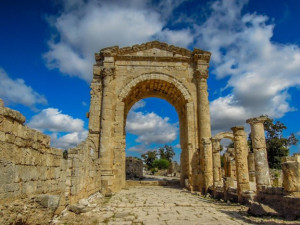
Tyre: Al-Bass archaeological area with its Roman hippodrome, triumphal arch, and necropolis.
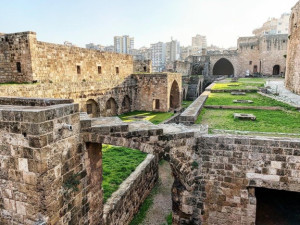
Tripoli: The Citadel of Raymond de Saint-Gilles, a Crusader fort later expanded by Mamluk and Ottoman rulers.
Jounieh: Shrine of Our Lady of Lebanon in Harissa, and remnants of Roman architecture in nearby Zouk Mikael.

Sidon
Sidon, known in Phoenician as Ṣīdūn (present day Arabic name: صيدا / Saida), is one of the oldest and most important cities of ancient Phoenicia. Located on the southern coast of modern-day Lebanon, it played a major role in Phoenician trade and maritime expansion. By the 2nd millennium BCE, Sidon had already established itself as a key port city and cultural center, renowned for its skilled craftsmen and artisans, especially in glass production, purple dye manufacture, and shipbuilding.
Historical Importance
Sidon is frequently mentioned in ancient texts, including the Bible and Egyptian records. It maintained close trade relationships with Egypt, Cyprus, and later, the Greeks and Romans. The city was also known for its religious devotion, especially to the goddess Astarte, often worshipped alongside Eshmun, the god of healing.
One of Sidon’s most famous kings was Eshmunazar II, whose richly inscribed sarcophagus (now in the Louvre) attests to the city’s wealth and connections with Egypt and Mesopotamia. Sidon fell under the control of several empires, including the Assyrians, Babylonians, Persians, and eventually Alexander the Great, who spared the city after its peaceful surrender.
Notable Monuments in Sidon
– Temple of Eshmun: One of the most significant Phoenician temples, dedicated to the god of healing.
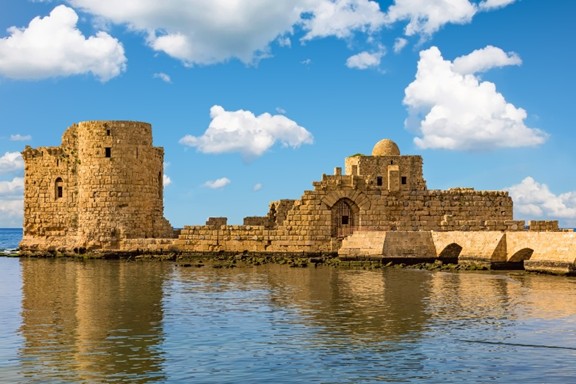
– Sidon Sea Castle: A 13th-century Crusader fortress built on a small island.
– Khan al-Franj: A well-preserved caravanserai from the Ottoman period.
– Necropolis of Magharet Abloun: Rock-cut tombs and sarcophagi from the Persian and Hellenistic eras.
Famous Dishes and Food
Sidon is celebrated across Lebanon for its culinary heritage. Common dishes include:
– Siyyadiyeh – Spiced rice with fried fish, pine nuts, and caramelized onions.
– Kibbeh Samak – A seafood twist on the classic bulgur-based dish.
– Baklava & Sfouf – Signature Lebanese desserts perfected in Sidon.
– Roz bi Haleeb (rice pudding) and Meghli (spiced rice pudding).
Sidon also excels in pickled specialties like makdous, kishk, and labneh with za’atar and olives.